At COP30, governments and partners are addressing a neglected but powerful opportunity for climate action: the school kitchens that nourish millions of children.
“By transforming the way clean cooking in schools works, we can improve health, protect forests, and empower the next generation to thrive in a more sustainable world. The Global Platform for Clean Cooking in Schools exemplifies the kind of solution we want to highlight—one that connects climate action directly with millions of people on the ground. This is a concrete plan to ensure access to clean cooking, accelerating progress in the spirit of the Action Agenda.”
Dan Ioshpe, COP 30 Climate High-Level Champion, Brazil
That vision is now taking shape through the Platform for Clean Cooking in Schools, launched at COP30. The Platform brings together partners led by Sustainable Energy for All (SEforALL) together with the World Food Programme (WFP), the School Meals Coalition, the Sustainable Financing Initiative for School Health and Nutrition, UKAid – Modern Energy Cooking Services (MECS) Programme, the Government of Iceland, the Middle East Green Initiative – Forward7, Global Platform for Action (GPA) and Lightrock.
The overlooked frontier of climate action
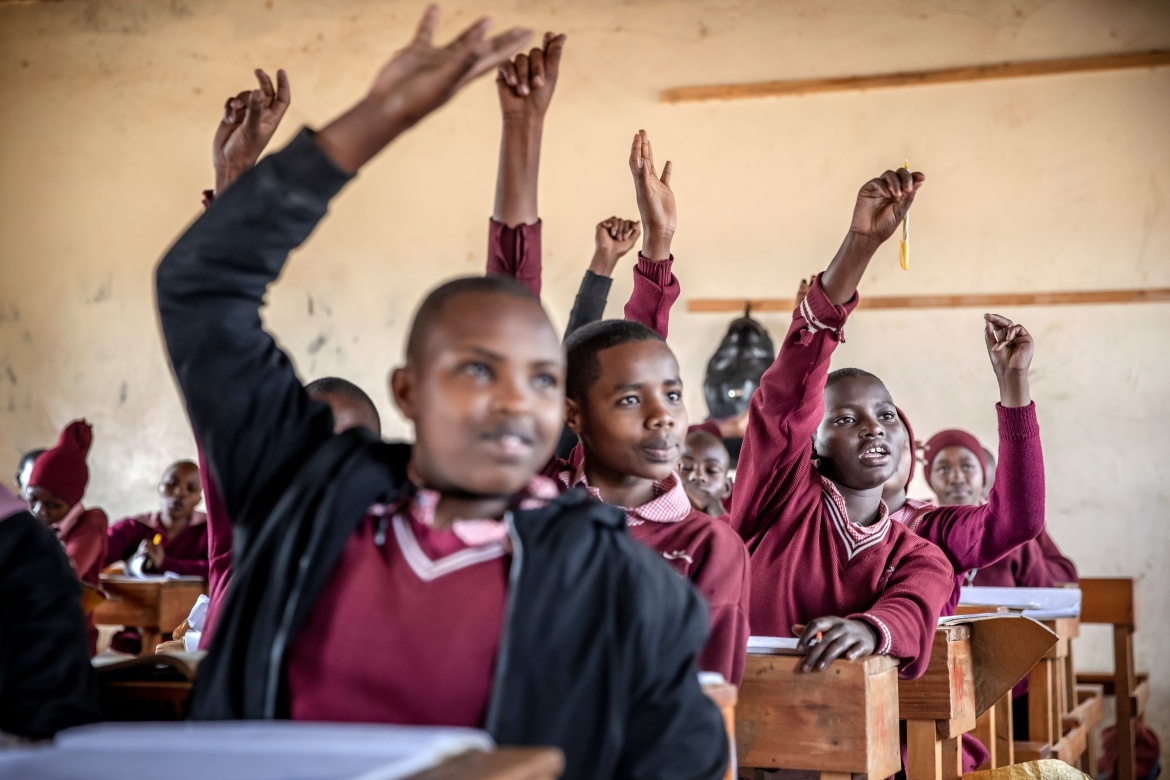
The shift to clean cooking in schools begins by acknowledging how long this issue has been overlooked. Every school day, about 466 million children globally receive a school meal — yet how those meals are cooked remains one of the least examined sources of emissions and health risks.
Most schools in low-income and lower-middle-income countries, particularly in Sub-Saharan Africa, still rely on polluting fuels such as firewood, charcoal, and kerosene. Schools are now the second largest users of biomass energy after households. Across Sub-Saharan Africa, school kitchens burn roughly 8 million tons of firewood each year, releasing an estimated 12-14 million tons of carbon dioxide equivalent — the same as 2.3-3.2 million gasoline-powered cars on the road annually.
This is not only a climate issue, but a human rights one. Cooks, often women, spend hours in smoke-filled kitchens that harm their health. Children inhale that smoke as they learn. Forests are stripped for firewood, while women and girls spend hours collecting it.
Clean cooking offers a way out. Unlike traditional or improved cookstoves, clean cooking solutions meet the World Health Organization (WHO) air quality standards for particulate matter (PM2.5) and carbon monoxide (CO) levels, significantly reducing exposure to harmful pollutants.
Evidence from Nairobi, Kenya, shows why clean cooking matters. A pilot study in three schools using wood and charcoal found particulate matter concentrations three times higher in classrooms, nine times higher in kitchens, and six times higher in cooks’ personal exposure than even the most polluted WHO interim air quality target (35 µg/m3).
Cooks reported chronic coughing, wheezing, and chest tightness, often stepping outside to breathe. Teachers noticed similar symptoms in students. Lessons were frequently disrupted when smoke drifted into classrooms, forcing classes outdoors.
While more research is needed to quantify the full educational and health costs, the findings reveal how poor air quality quietly undermines learning. Nearly 80% of school meal programs in low- and middle-income countries still rely on inefficient, polluting stoves, exposing millions of children daily to harmful air.
Shifting to truly clean cooking solutions, especially electric cooking (eCooking), also offers an opportunity to advance the broader electrification agenda. eCooking in schools can generate steady demand for electricity in rural and underserved areas, helping drive the growth of off-grid and mini-grid systems.

Why has financing never reached the stove?
Despite the clear benefits, less than 0.005% of global climate-related development finance supports school meals — and it is likely only a fraction of that targets clean cooking. The barrier is not impact, but visibility. A lack of evidence on the true costs of traditional biomass cooking and the cost of inaction has kept the issue hidden across sectors.
Within ministries, clean cooking in schools often falls between mandates: too small for energy, outside education’s remit, too micro for environment, beyond the household for health, too demand-side for agriculture, and too cross-sectoral to fit a single budget line.
Development partners face similar dynamics. Investments in school-based clean cooking are typically fragmented, project-based and one-off, often without the technical support, maintenance, or coordination needed to last. The result is a space where the issue seems to belong everywhere — but in practice belongs nowhere.
Bringing visibility to the invisible
At COP30, governments and partners launched the Platform for Clean Cooking in Schools to confront a persistent systems gap: the invisibility of school kitchens across sectors. The platform will make this issue visible where it matters most: in policy design, implementation, and financing. Working with governments and partners, it will help mobilise financing from related sectors and ensure that school meal budgets account for not only how food is produced and what is cooked, but also how it is cooked.
The Sustainable Financing Initiative (SFI) is also helping governments and partners accelerate this shift. It helps governments cost their school meal programmes and develop sustainable financing plans that can include, based on country demand, more fuel-efficient stoves and incremental capital investment. The SFI is also working with governments to embed school meals in their Nationally Determined Contributions (NDCs) – an approach that could extend to clean cooking, anchoring it in national climate, adaptation, and financing strategies.
Accelerating the transition
Transitions toward more human-centred and sustainable systems—whether in energy, food or industry—rarely happen overnight. As MacKintosh (2025) describes, they follow an S-curve of change, much like the growth of a forest. Early progress is slow and often invisible, as roots take hold and the groundwork for innovation is laid. With the right mix of policies, incentives, investments, and political will, change accelerates — costs fall, confidence builds, and adoption spreads. Over time, as in a mature forest, progress steadies and new practices become the norm.
Governments can steepen this curve—shortening the path from pilot to scale—through fiscal, regulatory, and behavioural measures that accelerate uptake and lower costs. Fiscal tools, such as tax credits and concessional, blended and climate finance, can encourage innovation. Regulatory and market levers like procurement and product standards, fuel pricing, or phase-out timelines, can help level the field. Behavioural levers, such as awareness campaigns on the health and environmental harms of polluting fuels, can shift norms and spark institutional demand.
Rewiring mindsets
Early pilots in East Africa show how governments, partners, and suppliers are beginning to climb the S-curve of change. But steepening that curve will take more than new technology; it will require a shift in the systems that govern them.
The new Platform for Clean Cooking in Schools, together with partners like the SFI, can help governments and partners make that shift. By linking clean cooking in schools to broader electrification efforts, it can accelerate progress and ensure that every clean-cooked meal nourishes a child, safeguards children’s and cooks’ health, improves the school environment, conserves forests, and cuts emissions—proving that climate action can serve both people and planet.
Photo credits: SEforALL